

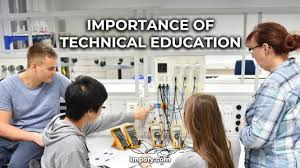
In an era defined by rapid technological change, shifting job markets, and evolving industry demands, traditional education alone is no longer enough. Employers today are not just looking for degrees—they are looking for skills, experience, and job readiness. This is where technical education plays a transformative role. Bridging the gap between classrooms and careers, technical education equips learners with practical knowledge, hands-on experience, and industry-relevant skills that lead directly to employment and career growth.
Understanding Technical Education
Technical education, also known as vocational or skill-based education, focuses on teaching practical and applied skills related to specific trades, professions, or technologies. Unlike purely academic education, technical education emphasizes learning by doing. It includes areas such as engineering technologies, information technology, healthcare, construction, automotive technology, electronics, hospitality, and advanced manufacturing.
By aligning education with real-world job requirements, technical education ensures that students graduate with competencies that employers actively seek.
The Growing Demand for Skill-Based Learning
The global economy is undergoing a skills revolution. Automation, artificial intelligence, and digital transformation have reshaped industries across the board. According to labor market trends, many high-demand jobs today require specialized technical skills rather than general academic knowledge.
Industries such as IT, renewable energy, healthcare, logistics, and manufacturing are facing a growing skills gap. Technical education addresses this gap by producing a workforce that is:
- Job-ready from day one
- Adaptable to new technologies
- Capable of meeting industry standards
- Trained in problem-solving and innovation
This makes technical education a critical driver of economic growth and employment.
From Theory to Practice: How Technical Education Works
One of the greatest strengths of technical education is its hands-on approach. Students learn through workshops, labs, simulations, apprenticeships, and internships. This practical exposure allows learners to apply theoretical concepts to real-world situations.
Key Features of Technical Education
- Industry-aligned curriculum designed with employer input
- Practical training using modern tools and equipment
- Internships and apprenticeships for real workplace experience
- Certification and competency-based assessment
- Short-term and long-term programs catering to diverse learners
This approach not only enhances technical proficiency but also builds confidence, discipline, teamwork, and professional ethics.
Technical Education and Career Readiness
One of the biggest challenges graduates face is the transition from education to employment. Technical education simplifies this transition by directly connecting learning outcomes to career pathways.
Students of technical education often benefit from:
- Higher employability rates
- Faster entry into the workforce
- Competitive salaries in skilled professions
- Opportunities for entrepreneurship and self-employment
Because technical education focuses on in-demand skills, graduates are less likely to face unemployment compared to those with non-specialized degrees.
Empowering Youth and Lifelong Learners
Technical education is not limited to young students—it empowers learners of all ages. School leavers, college graduates, working professionals, and career switchers can all benefit from technical training programs.
For youth, technical education offers an alternative path to success, especially for those who may not thrive in traditional academic settings. For adults, it provides opportunities to upskill, reskill, or pivot careers in a rapidly changing job market.
This inclusivity makes technical education a powerful tool for social mobility and economic empowerment.
The Role of Technology in Modern Technical Education
Modern technical education has evolved far beyond traditional workshops. Today, it incorporates cutting-edge technologies such as:
- Digital labs and virtual simulations
- Online and blended learning platforms
- AI-driven skill assessment tools
- Industry 4.0 technologies like robotics and IoT
These innovations enhance learning outcomes, expand access to education, and prepare students for technology-driven workplaces.
Technical Education vs Traditional Education
While traditional education builds foundational knowledge and critical thinking, technical education focuses on practical application and employability. Rather than competing, the two systems complement each other.
| Traditional Education | Technical Education |
|---|---|
| Theory-focused | Skill-focused |
| Longer academic pathways | Shorter, job-oriented programs |
| Broad knowledge | Specialized expertise |
| Delayed employment | Faster career entry |
By integrating both approaches, education systems can create well-rounded, future-ready professionals.
Supporting Economic Growth and Industry Development
Technical education plays a vital role in national development. A skilled workforce attracts investment, boosts productivity, and supports innovation. Countries that prioritize technical and vocational education often experience:
- Lower unemployment rates
- Stronger industrial growth
- Increased global competitiveness
- Enhanced entrepreneurship
Small and medium enterprises, in particular, rely heavily on technically trained professionals to drive operations and innovation.
Overcoming the Stigma Around Technical Education
Despite its advantages, technical education has historically been undervalued in some societies. There is a lingering misconception that vocational paths are inferior to academic degrees. This mindset is rapidly changing.
Today, skilled technicians, engineers, programmers, and healthcare professionals are among the most respected and well-paid workers. Raising awareness about the value of technical education is essential to encourage more students and parents to embrace this pathway.
The Future of Technical Education
The future of work demands continuous learning. Technical education is uniquely positioned to support lifelong skill development. As industries evolve, training programs can be updated quickly to match new requirements.
Key trends shaping the future include:
- Greater industry-education collaboration
- Micro-credentials and modular learning
- Global certification standards
- Focus on green skills and sustainability
- Increased use of digital and remote training
These developments ensure that technical education remains relevant, flexible, and future-proof.
Why Technical Education Matters More Than Ever
In a world where careers are no longer linear and job roles change rapidly, technical education provides stability and opportunity. It empowers individuals to take control of their careers, adapt to new challenges, and contribute meaningfully to society.
By transforming classrooms into launchpads for careers, technical education bridges the gap between learning and earning.
Conclusion
From classrooms to careers, technical education is a powerful catalyst for personal success and economic progress. It equips learners with practical skills, real-world experience, and industry relevance—turning education into opportunity.
As the demand for skilled professionals continues to rise, embracing technical education is no longer optional—it is essential. For students, educators, industries, and policymakers alike, investing in technical education means investing in a stronger, more resilient future.
If you’d like, I can also:
- Optimize this further for Google featured snippets
- Add meta title, meta description, and keywords
- Rewrite it for blogs, LinkedIn, or academic tone
- Localize it for a specific country or education system
Just tell me 👍