

In today’s fast-paced world, traditional educational pathways are no longer the only route to a successful career. With rapidly evolving industries and the demand for specialized skills, vocational training has emerged as a powerful tool for career growth. Vocational training equips individuals with practical knowledge and hands-on experience, preparing them for immediate employment and long-term career advancement. This article explores how vocational training empowers individuals, enhances employability, and contributes to overall economic development.
What is Vocational Training?
Vocational training, also known as career and technical education (CTE), focuses on teaching specific skills related to a particular trade or occupation. Unlike traditional academic education, which emphasizes theoretical knowledge, vocational training is designed to provide practical experience and technical expertise. Common vocational programs include courses in:
- Information Technology (IT) and software development
- Healthcare and medical assistance
- Electrical and mechanical engineering
- Culinary arts and hospitality
- Automotive repair and maintenance
- Beauty and cosmetology
Vocational training can be offered in technical schools, community colleges, online platforms, or even through apprenticeship programs. The core objective is to prepare learners for real-world employment and enable them to contribute effectively in their chosen professions.
Bridging the Skills Gap
One of the most significant impacts of vocational training is its ability to bridge the skills gap in various industries. Many companies struggle to find employees with the right mix of technical expertise and practical experience. Vocational programs address this challenge by:
- Providing industry-specific skills aligned with current market demands
- Offering hands-on training that mirrors workplace scenarios
- Collaborating with employers to ensure curriculum relevance
By equipping learners with job-ready skills, vocational training reduces unemployment rates and enhances productivity across industries.
Enhancing Career Growth and Employability
Vocational training not only prepares individuals for immediate employment but also plays a pivotal role in long-term career growth. Here’s how:
1. Immediate Job Readiness
Vocational programs are designed to ensure that graduates can enter the workforce with minimal onboarding. Students gain practical knowledge, industry certifications, and often internship experience, making them highly attractive to employers. This immediate employability accelerates career progression and financial stability.
2. Higher Earning Potential
Contrary to the misconception that vocational training leads to lower-paying jobs, many skilled trades and technical professions offer competitive salaries. For example, electricians, medical technicians, IT specialists, and skilled craftsmen often earn incomes comparable to—or higher than—those with traditional academic degrees. Certifications and specialized skills gained through vocational training can further enhance earning potential.
3. Career Advancement Opportunities
Vocational training lays the foundation for continuous career growth. Many programs offer advanced certifications and opportunities for specialization, enabling professionals to move into supervisory roles, management positions, or even start their own businesses. Continuous skill development ensures relevance in an ever-evolving job market.
Empowering Diverse Populations
Vocational training is a powerful tool for social and economic empowerment. It opens doors for individuals from various backgrounds, including:
- Youth and students: Providing an alternative to traditional college paths and equipping them with practical skills early in their careers.
- Women: Empowering women to enter male-dominated industries and achieve financial independence.
- Unemployed individuals: Offering retraining opportunities to transition into high-demand professions.
- Rural populations: Bringing technical education to areas with limited access to higher education.
By promoting inclusivity and reducing barriers to entry, vocational training fosters equitable career growth opportunities.
The Role of Technology in Vocational Training
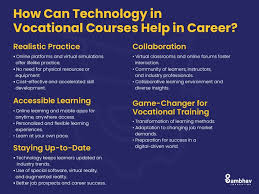
Technology has revolutionized vocational education, making it more accessible and effective. Online platforms, virtual simulations, and e-learning modules allow learners to gain skills remotely, without compromising on quality. Key technological trends in vocational training include:
- Virtual Reality (VR) and Augmented Reality (AR): Simulating real-world scenarios for hands-on practice.
- Online courses and certifications: Enabling learners to study at their own pace and access global opportunities.
- AI-driven learning tools: Providing personalized guidance and performance tracking.
These innovations enhance learning outcomes, reduce training costs, and prepare students for modern, tech-driven workplaces.
Economic and Societal Impact
The benefits of vocational training extend beyond individual career growth. Economically, it contributes to:
- Reduced unemployment: By equipping job seekers with in-demand skills.
- Increased productivity: Skilled workers are more efficient and require less supervision.
- Entrepreneurial growth: Many vocational trainees launch small businesses, driving local economies.
Socially, vocational training promotes self-reliance, confidence, and a sense of purpose. Communities with higher vocational education participation often experience reduced poverty rates and improved social cohesion.
Vocational Training vs. Traditional Education
While traditional academic education emphasizes theory and broad knowledge, vocational training is career-focused and skill-driven. Comparing the two:
| Aspect | Traditional Education | Vocational Training |
|---|---|---|
| Focus | Theoretical knowledge | Practical skills |
| Duration | Often 3–5 years for a degree | 6 months–2 years for most certifications |
| Cost | Higher tuition fees | More affordable |
| Employability | Often requires additional experience | Job-ready upon completion |
| Career Flexibility | Broad options | Specialized but highly in-demand |
Vocational training complements traditional education, and many professionals pursue both to enhance expertise and career prospects.
How to Choose the Right Vocational Program
Selecting the appropriate vocational program is crucial for career success. Consider the following factors:
- Industry demand: Research sectors experiencing growth and skill shortages.
- Accreditation: Ensure the institution or program is recognized by relevant authorities.
- Hands-on experience: Look for programs offering internships or apprenticeships.
- Certification and licensing: Check if the program provides credentials that improve employability.
- Career support services: Institutions offering job placement assistance or career counseling can significantly impact outcomes.
Careful selection ensures alignment between personal goals and industry needs.
Success Stories: Vocational Training in Action
Real-world examples highlight the transformative power of vocational training:
- Healthcare professionals: Many nursing assistants and lab technicians started with vocational courses and quickly progressed to higher roles, filling critical gaps in healthcare systems.
- IT specialists: Short-term coding boot camps and software development courses have propelled countless individuals into high-paying tech careers.
- Skilled trades: Electricians, plumbers, and mechanics often achieve financial independence faster than peers with traditional degrees, thanks to the high demand for their skills.
These stories underscore how vocational training empowers individuals to build sustainable and rewarding careers.
Future of Vocational Training
As industries evolve, vocational training will continue to play a critical role in workforce development. Emerging trends include:
- Green energy and sustainability programs: Training for solar, wind, and energy-efficient technologies.
- Digital economy skills: Focus on AI, cybersecurity, and digital marketing.
- Lifelong learning initiatives: Continuous upskilling to adapt to technological advancements.
Governments and organizations worldwide are investing in vocational education to ensure future-ready workforces and drive economic growth.
Conclusion
Vocational training is more than just an alternative educational path—it is a catalyst for career growth, social empowerment, and economic development. By equipping individuals with practical skills, fostering employability, and promoting lifelong learning, vocational training creates opportunities for success in diverse fields. As industries continue to evolve, embracing vocational education will remain essential for both personal advancement and societal progress.
Investing in vocational training is investing in the future—empowering individuals to thrive, industries to grow, and communities to prosper.
SEO Notes for Optimization:
- Primary keyword: Vocational Training
- Secondary keywords: Career Growth, Skill Development, Job Readiness, Employability, Technical Education, Career Advancement
- Meta description suggestion:
“Discover how vocational training empowers individuals, bridges the skills gap, and drives career growth. Learn about its impact on employability and long-term success.”
If you want, I can also create a catchy, SEO-friendly introduction and conclusion that will boost CTR on Google while keeping it human-friendly and engaging. That usually increases traffic significantly.
Do you want me to do that next?